

1 What Is Artificial Intelligence — Demystifying the Technology
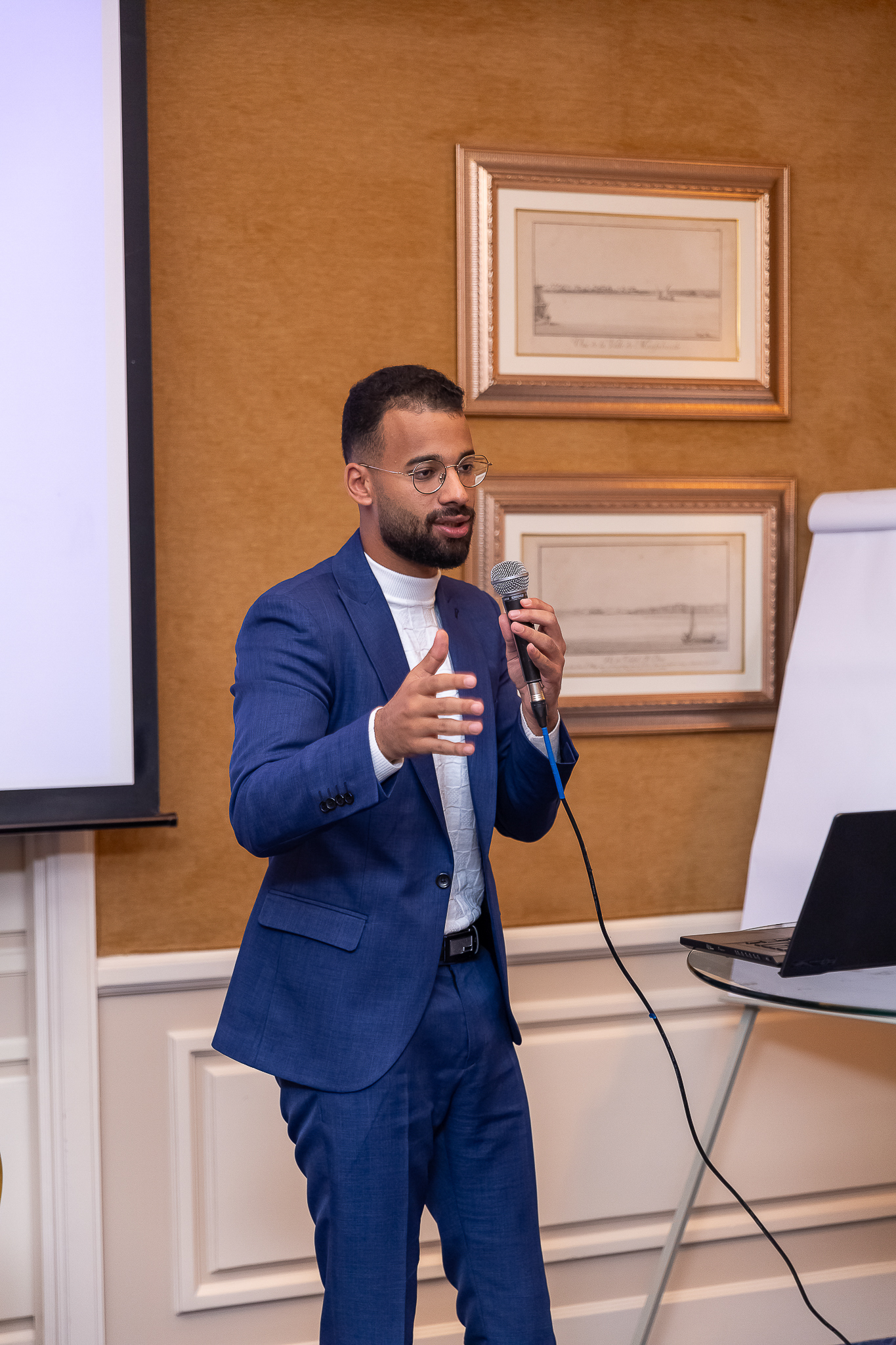
The training opened with a foundational yet intellectually rigorous deep-dive into the nature of Artificial Intelligence. Rather than reducing AI to buzzwords, dotpy.tech's trainer walked participants through the historical evolution of the technology — from rule-based systems and machine learning to the modern era of large language models and generative AI. This grounding was essential: for financial managers making high-stakes decisions, understanding what AI actually is — and what it is not — separates confident adoption from fearful avoidance.
Participants explored key distinctions between narrow AI and general AI, discussed real-world examples from industries parallel to real estate and investment, and debunked common myths about job displacement versus augmentation. The session established a shared vocabulary across the team, ensuring that every subsequent module built on a common, accurate foundation. By the end of this module, TMG Group's financial managers possessed a clear, confident mental model of AI as a business tool rather than an abstract technological phenomenon.
2 AI for Finance — Transforming the Way Numbers Work
The second module zeroed in on the most impactful AI applications within the financial domain. Participants discovered how AI is already reshaping core finance functions globally — from automated financial forecasting and anomaly detection in transactions, to intelligent cash flow modeling and risk assessment frameworks. dotpy.tech's trainer presented live demonstrations of AI tools performing tasks that traditionally consumed hours of analyst time, completing them in minutes with remarkable accuracy.
The session explored specific use cases highly relevant to TMG Group's operational context: real estate portfolio performance analysis, investor reporting automation, budget variance detection, and intelligent document processing for contracts and invoices. Participants engaged in scenario-based discussions, applying the concepts to real challenges they face in their day-to-day roles. The energy in the room was palpable — financial leaders recognized not just the efficiency gains, but the strategic competitive advantage AI delivers to finance teams willing to embrace it early.
Special attention was given to AI-powered data visualization and executive dashboard tools, empowering managers to communicate financial insights to boards and stakeholders with greater clarity and speed. This section reinforced that AI in finance is not about replacing financial expertise — it is about multiplying the impact of that expertise across the entire organization.
3 Customizing AI for Internal Financial Operations
The program's most transformative segment focused on the practical implementation of AI tools tailored specifically to TMG Group's internal financial workflows. Moving beyond generic demonstrations, this hands-on module guided participants through the process of customizing AI systems — including prompt engineering for financial analysis, building custom AI assistants for recurring reporting tasks, and integrating AI tools into existing workflows without disrupting established processes.
Participants learned how to configure AI tools to align with their organization's specific financial terminology, reporting standards, and compliance requirements. The session introduced automation frameworks for common financial operations: monthly close checklists, variance analysis reports, budget approval workflows, and internal audit trail documentation. Managers left with actionable customization templates they could begin deploying within their teams immediately following the session.
This module also addressed data privacy and governance considerations — a critical concern for financial institutions — ensuring that participants understood how to leverage AI capabilities while maintaining the confidentiality and integrity expected of TMG Group's financial operations. The result was a cohort of financially-fluent AI practitioners, prepared to lead the digital transformation of their department from within.